Tariffs, AI and Automation Reshape Global Manufacturing Strategy
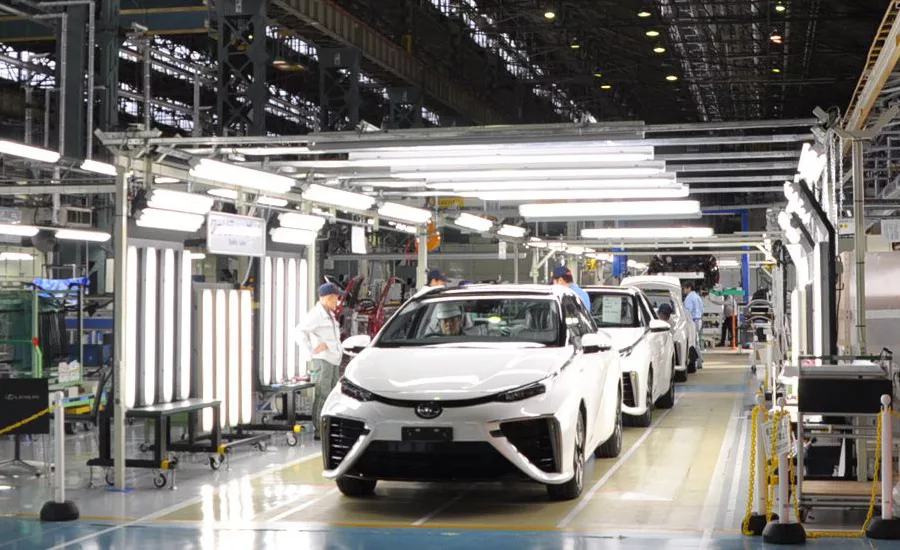
BOSTON — Artificial intelligence, advanced automation and rising tariff pressure are beginning to reshape where automotive and aerospace manufacturers choose to build products, potentially reducing some of the long-standing cost advantages of lower-wage production regions, according to a new report from Boston Consulting Group.
The report argues that AI-enabled “Factory of the Future” production systems are increasingly tying manufacturing location decisions directly to automation strategy, factory design and operational productivity rather than labor costs alone.
BCG said advanced manufacturing systems can generate productivity gains of up to 60% in some industries by combining AI, automation, intelligent process control and digitally connected production systems across entire factory operations. This is especially important considering BCG estimated that roughly $1.03 trillion of manufacturing value is at risk of relocation from Western Europe and the Nordics, with another $440 billion potentially shifting within the United States.
The report found that in sectors such as automotive manufacturing and aerospace and defense, highly automated production systems can significantly narrow the cost gap between high-cost and low-cost manufacturing regions.
According to BCG, the economics increasingly favor automation investment in higher-wage countries because productivity gains generate larger absolute savings. In automotive manufacturing, the report found that Factory of the Future deployments in lower-cost regions can take two to eight times longer to recover investment costs than similar deployments in higher-wage markets.
The report also highlighted the growing role of tariffs and localization pressure in reshaping manufacturing footprint decisions.
BCG said tariffs can quickly alter the economics of offshoring, with a 25% tariff rate potentially eliminating the export business case for many manufacturers. However, the report warned that tariffs alone are not enough to maintain long-term competitiveness if manufacturers fail to modernize production systems.
Looking for quick answers on assembly and manufacturing topics? Try Ask ASM, our new smart AI search tool. Ask ASM
“The critical variable is no longer relative labor costs and logistics from suppliers and to customers, but how effectively a facility can be transformed into a highly productive Factory of the Future,” the report stated.
In U.S. automotive manufacturing, the report found that advanced automation and AI-driven production systems could make domestic factories more competitive than relocating production to Mexico, even if tariff conditions change.
In aerospace and defense manufacturing, the report said highly automated “Factory of the Future” operations could help Western manufacturers reach competitive parity with lower-cost production regions, particularly in brownfield facilities where existing infrastructure and workforce capabilities remain in place.
The report said manufacturers must increasingly evaluate production location decisions alongside automation readiness, workforce capabilities, digital infrastructure, tariffs and supply-chain resilience rather than treating them as separate strategic questions.
The report said the broader shift reflects a move away from manufacturing models built primarily around labor arbitrage and toward production systems increasingly defined by automation capability, AI integration and operational efficiency.
Read the full report.
Looking for a reprint of this article?
From high-res PDFs to custom plaques, order your copy today!